China’s Storage Solutions manufacturers serve warehouses, factories, retailers, and expanding e-commerce networks. Their products range from pallet racking and shelving to automated storage and retrieval systems. The right choice depends on more than price. Load capacity, aisle width, installation quality, and access to spare parts all matter.
Grand View Research’s Warehouse Automation Market report estimated the global market at USD 20.3 billion in 2023 and projected continued growth through 2030. That figure signals rising investment, not a guarantee that automation suits every site. A small distribution center may gain more from better shelf layout than from a complex robotic system. Small details matter.
Inventory discipline matters, too. Toyota Production System pioneer Taiichi Ohno is widely quoted as saying, “The more inventory a company has, the less likely they will have what they need.” The remark is a useful reminder: storage should improve flow, not simply add capacity. A crowded aisle can hide costly design problems.
This guide introduces ten Chinese manufacturers and the capabilities buyers should compare. It considers product range, customization, engineering support, and evidence of quality management. Specifications and certifications should be checked directly with each supplier; marketing language alone is not proof. A catalog shows possibilities. A site visit, sample inspection, and clear drawings can reveal the practical differences. These companies are not interchangeable, and the best fit depends on your facility, goods, and operating goals.
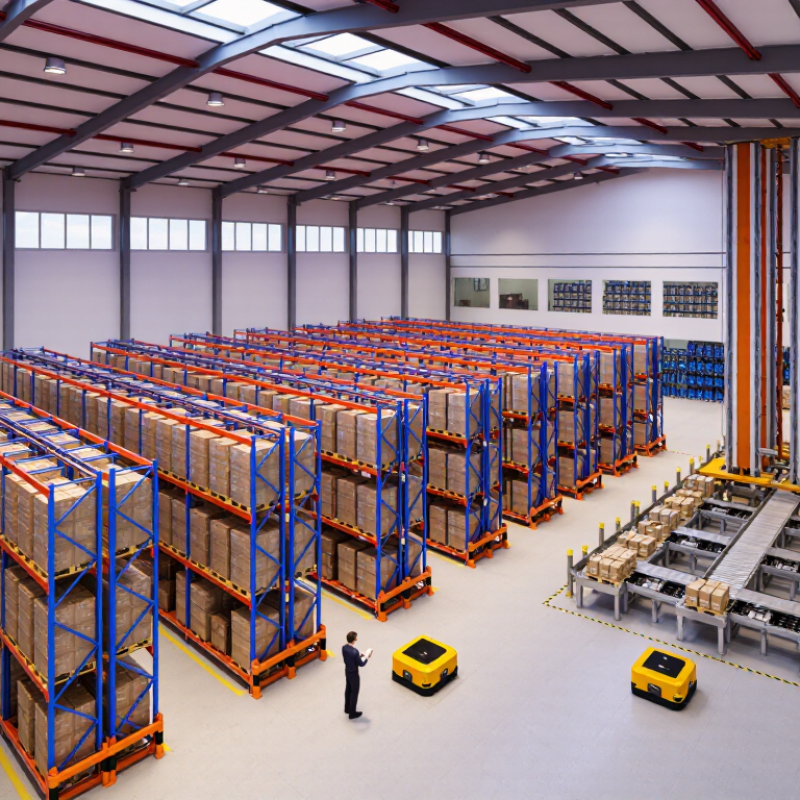
China’s storage-solutions manufacturing industry covers more than warehouse racking. It includes pallet shelves, high-bay systems, mezzanines, bins, conveyors, and automated storage and retrieval equipment. Manufacturers also design control software and integrate equipment with warehouse workflows. A typical facility may combine steel racks, barcode scanning, and shuttle systems to move cartons between storage and dispatch. The mix varies widely.
Demand is shaped by logistics growth and changing order patterns. The China Federation of Logistics and Purchasing reported that China’s total social logistics value reached 360.6 trillion yuan in 2024, up 5.8% year on year. The National Bureau of Statistics reported online retail sales of 15.5 trillion yuan, up 7.2%. These figures indicate a broad operating context, not storage-equipment sales. That distinction matters.
The industry serves e-commerce, manufacturing, food distribution, and cold-chain operations, where space, load capacity, temperature, and picking speed affect system design. Projects can range from basic selective racks to dense automated installations. Steel costs, site conditions, and maintenance needs also shape purchasing decisions. The picture is not perfectly neat: public reports rarely separate storage-equipment output from the wider logistics and machinery sectors. Buyers should compare usable capacity, safety specifications, service support, and integration requirements—not just advertised throughput.
Selecting a storage solutions manufacturer starts with the operating need, not a product catalog. Check shelf dimensions, rated load per level, aisle clearance, and the goods’ weight and shape. A system holding boxed components may not suit long pipes or moisture-sensitive stock. Ask for engineering drawings, load data, material specifications, and relevant quality records. Clear evidence matters.
Review how the manufacturer controls production consistency. Inspect welds, coating coverage, upright alignment, and edge finishing on a sample unit. Ask how changes are documented and what inspection happens before shipment. Practical support counts too: installation guidance, replacement parts, and realistic lead times can affect daily operations. If possible, visit the facility or arrange an independent inspection. A polished sample is useful, but it cannot guarantee every production batch will match. That uncertainty deserves attention.
Tips: Measure the actual floor, including columns, doors, and sprinkler clearance. Test one storage bay before ordering a full system. Record the agreed load limits and installation tolerances. No checklist removes every risk; revisit assumptions after the pilot installation.
Use the criteria below to assess manufacturers of industrial shelving, pallet racking, and warehouse storage systems. The weights are a suggested evaluation framework, not a published market ranking. Apply product-specific standards only where relevant.
| No. | Selection Criterion | Suggested Weight | What to Evaluate | Evidence to Request |
|---|---|---|---|---|
| 1 | Product and Application Fit | 15% | Whether the product range suits the intended loads, storage method, facility layout, and operating environment. | Product specifications, load tables, layout drawings, and examples of comparable installations. |
| 2 | Engineering and Design Capability | 14% | The ability to provide project-specific designs, structural calculations, and clear installation documentation. | Design deliverables, calculation summaries, drawings, and documented design review procedures. |
| 3 | Safety and Standards Compliance | 13% | How the manufacturer addresses applicable design, installation, inspection, and operational safety requirements. | Relevant test or conformity documents and an explanation of applicable standards. For steel static storage systems, EN 15512, EN 15620, EN 15629, and EN 15635 may be relevant depending on scope and application. |
| 4 | Manufacturing Quality Control | 12% | Controls over incoming materials, fabrication, coating, dimensional checks, and final inspection. | Inspection plans, sample quality records, material traceability procedures, and quality-system certificates where applicable. |
| 5 | Production Capacity and Lead-Time Reliability | 10% | Whether available production resources and planning processes can meet the project’s required quantities and schedule. | A project-specific production schedule, stated capacity assumptions, and records or references for comparable deliveries. |
| 6 | Customization and Integration | 9% | The ability to accommodate site constraints, special handling needs, and interfaces with material-handling equipment or warehouse systems. | Scope and interface documents, customization options, and responsibility boundaries for design and installation. |
| 7 | Installation and Project Management | 8% | The clarity of project coordination, site readiness requirements, installation planning, and handover procedures. | Project plan, installation method statement, site responsibility matrix, and handover checklist. |
| 8 | Warranty and After-Sales Support | 7% | The transparency of warranty terms and the availability of technical support, spare parts, and repair guidance. | Written warranty terms, support process, spare-parts policy, and service contact arrangements. |
| 9 | Total Cost and Commercial Transparency | 7% | The completeness and comparability of pricing, including stated exclusions, logistics, installation, and maintenance considerations. | Itemized quotation, payment and delivery terms, scope exclusions, and any stated lifecycle or maintenance assumptions. |
| 10 | References and Verifiable Track Record | 5% | The relevance and verifiability of completed projects, particularly those with similar storage requirements and operating conditions. | Customer references where available, project descriptions, and permission-based site or installation evidence. |
| Total Suggested Weight | 100% | Score each criterion using the same evidence standard for every candidate. | ||
Suggested scoring: rate each criterion from 0 (no adequate evidence) to 5 (strong, verifiable evidence), then apply the criterion weight. Confirm that certificates and test documents match the specific product, site, and project scope.
China’s storage-solutions manufacturers span more than racking and shelving. The China Federation of Logistics and Purchasing reported that China’s total social logistics value reached 352.4 trillion yuan in 2023, up 5.2% year on year. That scale supports demand for denser storage and faster material handling, but does not prove any supplier’s performance. Fit matters.
A useful ten-profile view covers makers of pallet racks, mezzanines, automated storage and retrieval systems, shuttle systems, mobile shelving, and vertical lift modules. It also includes specialists in cold-storage equipment, warehouse control software, robotic handling, and integrated project engineering. These are capability profiles, not a verified ranking. Ask for load calculations, aisle drawings, safety documentation, and references from comparable sites. Details matter.
A rack maker may suit a simple, high-volume warehouse; an automation specialist may better serve a facility with costly floor space. Yet software integration and maintenance can disappoint, even when hardware looks impressive. Not every site wins. Buyers should compare throughput assumptions with observed operation, and check spare-parts lead times before signing. The CFLP’s logistics figures describe sector scale, not storage-equipment sales, so they should not be treated as a market-share measure.
China’s storage-solution manufacturers produce systems for warehouses, factories, retail spaces, and cold-storage facilities. Common products include selective pallet racks, drive-in racks, mezzanines, shelving, and automated storage equipment. Product choice depends on load weight, aisle width, ceiling height, and how often goods move. A rack holding boxed components needs different beam spacing from one storing long steel sections.
Technology varies across manufacturers. Some combine structural design software with automated cutting, punching, and welding to improve dimensional consistency. Others integrate conveyors, lifts, or shuttle systems with warehouse-control software. For buyers, useful evidence includes load calculations, material specifications, weld inspection records, and clear installation guidance. Sophisticated automation is not always the right fit. A simpler layout may be easier to maintain when product turnover is low.
Manufacturing capability matters beyond machine count. Check whether a factory can control steel thickness, coating quality, and assembly tolerances across repeat orders. Details matter. Sample parts, production records, and realistic lead-time estimates can help confirm what a supplier can deliver.
One caution: polished demonstrations do not always reflect performance during a busy shift. Ask how the system handles uneven loads, damaged components, and future layout changes. These practical questions reveal more than a catalog alone.
Storage demand is moving beyond simple rack density. Buyers now compare throughput, labor needs, software integration, and expansion costs. MHI’s 2024 Annual Industry Report found that 55% of surveyed supply-chain professionals planned to increase technology investment that year. It also reported that 88% expected technology spending to rise over five years. The direction is clear. But forecasts are not purchase orders.
Automation is part of this shift. The International Federation of Robotics reported 541,302 industrial robot installations worldwide in 2023, with Asia accounting for 70%. This is not a warehouse-only measure, so it should not be treated as direct proof of storage-system demand. Still, it reflects the region’s broader investment in automation. When comparing Chinese manufacturers, ask how a proposed system handles peak-season orders, irregular cartons, and future capacity growth.
Look beyond quoted price. Request measured cycle times, load-test records, software integration details, and spare-parts lead times. Ask who handles commissioning and operator training. A polished demonstration can hide awkward maintenance. Energy use matters, too, especially for systems running long shifts. Compare the same operating assumptions across suppliers, and check whether performance claims come from a comparable installation. Small gaps in the data deserve questions.
China’s online retail sales, a demand indicator for warehousing and storage capacity
Online retail sales rose from RMB 10.63 trillion in 2019 to RMB 15.52 trillion in 2024. This is a demand-side indicator, not a measure of storage-equipment sales. When comparing manufacturers, consider rated load capacity, storage density, automation compatibility, safety standards, customization, delivery times, and after-sales support. Data: China’s National Bureau of Statistics.
It covers pallet racks, high-bay systems, mezzanines, bins, conveyors, and automated storage equipment. Some providers also design software and integrate warehouse workflows.
Common users include e-commerce, manufacturing, food distribution, and cold-chain operations. Temperature matters. So do load capacity and picking speed.
No. China’s total social logistics value reached 360.6 trillion yuan in 2024. That reflects broad logistics activity, not storage-equipment sales.
Compare storage density, floor space, order patterns, and labor needs. Basic racks may suit simple, high-volume operations. Automation is not always better.
Ask for load calculations, aisle drawings, safety documents, and references from similar sites. Check usable capacity, not just advertised throughput.
Steel costs, site conditions, maintenance needs, and system integration all matter. A narrow aisle or uneven floor can change the plan.
Software integration and maintenance can disappoint, even when equipment looks impressive. Check spare-parts lead times. Small details can become big delays.
Not reliably. Public figures often combine storage equipment with wider logistics and machinery sectors. The picture is incomplete, and that distinction deserves attention.
China’s storage solutions manufacturing industry covers a broad range of products for organizing, handling, and storing goods across industrial, commercial, and residential settings. This overview explains how to assess manufacturers by considering product range, engineering expertise, production capacity, quality control, customization options, and ability to meet different project requirements. It also profiles ten notable types of manufacturers without focusing on brand names, highlighting the varied capabilities found across the sector.
The article examines products and technologies such as shelving, cabinets, containers, and integrated storage systems, alongside manufacturing processes and design considerations. It also outlines market trends, including demand for space-efficient designs, adaptable configurations, and improved operational efficiency. By comparing these factors, buyers can better understand the strengths and limitations of potential suppliers and select storage solutions that align with their budget, application, and long-term needs.

Kimsuk Racking