Choosing the best Push-Back Storage system begins with understanding how your warehouse truly operates. Product volume, pallet dimensions, load weight, and stock rotation all influence the decision. A system that looks efficient on paper may create daily problems when forklifts meet narrow aisles or damaged pallets.
Dr. James A. Tompkins, a widely cited warehouse-planning expert, once stated, “The warehouse is the heart of the supply chain.” His point remains practical. Storage equipment affects receiving speed, picking accuracy, labor movement, and inventory visibility. Push-Back Storage can provide high-density storage while reducing aisle requirements. It normally supports last-in, first-out handling, which suits products grouped by batch, season, or similar demand patterns. It may not suit every product.
Start with the pallet.
Measure its height, width, depth, and actual loaded weight. Then examine channel depth, rack beam levels, forklift reach, and floor conditions. A professional supplier should verify load ratings, impact protection, rack alignment, and operating clearances. Safety should never be treated as an optional upgrade. The best design also leaves room for inspection, maintenance, and future growth.
There is no perfect layout. That is worth admitting. A warehouse may need more selectivity, even when density appears attractive. Product movement can change after installation, too. For this reason, compare real order data with proposed capacity. Walk through a sample loading cycle. Watch how operators enter, load, retrieve, and exit each lane. The right Push-Back Storage system should perform reliably during ordinary work, not only during a polished presentation.
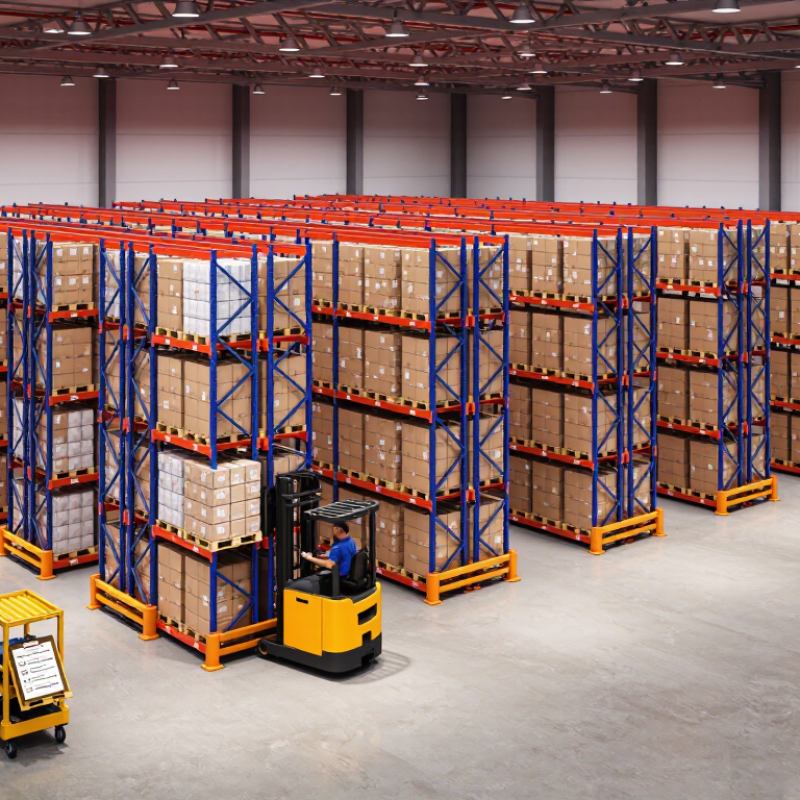
When selecting a push-back storage system, define the real storage need before comparing designs. Record pallet dimensions, product weight, SKU numbers, and daily movement. A warehouse may hold 600 pallets, yet only 350 may need regular access. Measure the available floor area carefully. Include columns, doors, sprinklers, lighting, and emergency routes. Do not rely on an old layout drawing. On-site conditions often differ.
Study inventory turnover and loading patterns. Fast-moving products need positions near dispatch areas, while slower goods can use deeper lanes. If most pallets share similar dimensions, push-back storage can improve space use. For mixed loads, adjustable configurations may be safer and more practical. Check the required number of pallet positions, lane depth, working aisle width, and clear ceiling height. Forklift turning space matters.
I once reviewed a plan that looked efficient on paper but left too little room beside a loading door. The system required costly changes. That mistake was avoidable. A rough space survey is not enough. Use measured drawings and verify the maximum stored load with qualified professionals. Leave room for inspections, repairs, and future volume changes. Empty space has value. It supports safer movement and more flexible operations. Recheck the design during peak inventory periods, because a quiet warehouse can hide its real limits.
| Storage Profile | Typical Load Size | Load Weight | Required Selectivity | Recommended Lane Depth | Estimated Storage Density | Suggested Aisle Width | Space Suitability | Operational Consideration |
|---|---|---|---|---|---|---|---|---|
| Fast-Moving Mixed Inventory | 1,200 × 1,000 mm pallet | Up to 1,000 kg | Medium to high | 2–3 pallets deep | Approximately 60–75% more pallet positions than single-deep selective storage in the same footprint | 3.0–3.5 m | Medium footprint | Use for products with several stock-keeping units and regular replenishment. Last-in, first-out access is normally acceptable. |
| High-Volume Seasonal Goods | 1,200 × 1,000 mm pallet | Up to 1,500 kg | Medium | 3–5 pallets deep | Approximately 70–100% more pallet positions than single-deep storage, depending on aisle and rack height | 3.0–3.5 m | High density | Suitable when many pallets contain the same product. Confirm that the floor, beams, and handling equipment are rated for the planned load. |
| Temperature-Sensitive Products | 1,200 × 800 or 1,200 × 1,000 mm pallet | Up to 1,000 kg | Medium | 2–4 pallets deep | High space utilization with reduced air circulation compared with selective rack layouts | 3.0–3.5 m | High density | Leave sufficient clearance for air movement, evaporator performance, sprinkler requirements, and safe equipment operation inside the controlled-temperature area. |
| Slow-Moving Reserve Stock | 1,200 × 1,000 mm pallet | Up to 1,500 kg | Low | 4–6 pallets deep | Approximately 75–120% more pallet positions than single-deep storage where building height permits | 3.0–3.5 m | Maximum density | Best where inventory turnover is low and direct access to every pallet is not essential. Apply clear lane labeling and stock rotation controls. |
| Small Warehouse With Limited Aisle Area | 1,000 × 1,200 mm pallet | Up to 1,000 kg | Medium | 2–3 pallets deep | Typically 50–75% more pallet positions than single-deep storage, subject to column and door locations | 2.8–3.2 m | Space-efficient | Measure clear dimensions around columns, dock doors, fire exits, and turning zones before finalizing the rack layout. |
| High Ceiling Warehouse | 1,200 × 1,000 mm pallet | Up to 1,500 kg | Medium | 3–5 pallets deep | Additional vertical levels can increase total pallet capacity without expanding the floor footprint | 3.0–3.5 m | Best vertical use | Verify clear height, sprinkler obstruction rules, lift-truck reach, mast height, slab capacity, and required clearance below roof structures. |
| FIFO-Critical Inventory | 1,200 × 1,000 mm pallet | Up to 1,000 kg | High | Usually 1–2 pallets deep | Lower density than push-back storage because each stock-keeping unit requires more direct access | 3.0–3.5 m | Selective access | Push-back storage may not be the preferred option when strict first-in, first-out rotation is required; evaluate carton flow or drive-through alternatives. |
| Planning basis: Actual capacity depends on pallet dimensions, load weights, rack height, building clear height, aisle design, fire-protection requirements, equipment specifications, column positions, and local safety regulations. Confirm final rack loads and layout with a qualified storage-system designer. | ||||||||
Choose based on product movement, SKU variety, inventory age, and forklift behavior. Floor space alone is not enough.
It suits multiple pallets of the same SKU and improves density within a similar aisle footprint. Deep lanes need careful planning.
It usually supports last-in, first-out handling. Older pallets may remain behind newer ones.
They fit fast-moving products with many SKUs. Every pallet remains directly accessible.
Record pallet weight, height, length, width, tunnel depth, and required clearance. Include uneven or poorly centered loads.
No. A 1,000-kilogram rating may not cover unstable loading or poor weight distribution. Real loads can behave differently.
Test pallet stability, loading speed, retrieval errors, and operator visibility. Watch forklifts turn during busy periods.
Include equipment, installation, inspections, training, maintenance, floor space, and future expansion. The lowest quotation may mislead.
Review seasonal demand, product changes, pallet sizes, and floor area every six months. Put planning assumptions in writing.
Do not size lanes only for optimistic growth forecasts. Older inventory may become difficult to find when demand slows.
Choosing the best Push-Back Storage system begins with a clear understanding of your warehouse needs, including available floor space, ceiling height, inventory volume, product dimensions, and expected turnover. Assess how much storage density is required and whether pallets are handled on a last-in, first-out basis. Understanding how the system uses inclined rails and carts to move pallets will help determine whether it suits your workflow.
Next, compare rack configurations, load capacities, pallet sizes, and loading methods to identify the right design for your operation. Consider safety features, operator access, product visibility, forklift movement, and the efficiency of loading and retrieving goods. A well-planned Push-Back Storage solution should improve space utilization without creating unnecessary handling challenges. Finally, evaluate installation, maintenance, and operating costs alongside future growth plans. Selecting a scalable system with suitable capacity and flexibility can support changing inventory demands while protecting your budget and maintaining reliable warehouse performance.

 Kimsuk Racking