How to Choose Narrow Aisle Storage for Your Warehouse?

Time:2026-09-27 Author:Charlotte
0%

Narrow Aisle Storage can create more pallet positions within the same warehouse footprint, but tighter aisles also change how equipment moves, operators work, and inventory is accessed. A layout that looks efficient on a plan may feel very different beside a loaded pallet. Small details matter.

The 2024 MHI Annual Industry Report, produced with Deloitte, found that 55% of surveyed supply chain professionals planned to invest more than $1 million in supply chain technology. This figure is not specific to narrow-aisle systems, but it reflects the pressure to improve capacity and operations. For warehouse decision-makers, the right choice depends on aisle width, lift-truck compatibility, pallet dimensions, rack height, inventory turnover, and floor conditions. Measure the actual operating environment—not just the available square footage.

Warehouse scholar John J. Bartholdi III, co-author of Warehouse & Distribution Science, is a relevant authority on warehouse design. However, no source material or verifiable verbatim quotation was provided, so attributing a direct quote to him would risk misrepresenting his words. A reliable evaluation should instead compare storage density with retrieval speed, safety, and total operating cost. That trade-off is easy to underestimate. A narrow aisle may add locations, yet create slower access if the equipment or workflow does not fit. The best system is the one your team can operate consistently, safely, and efficiently.
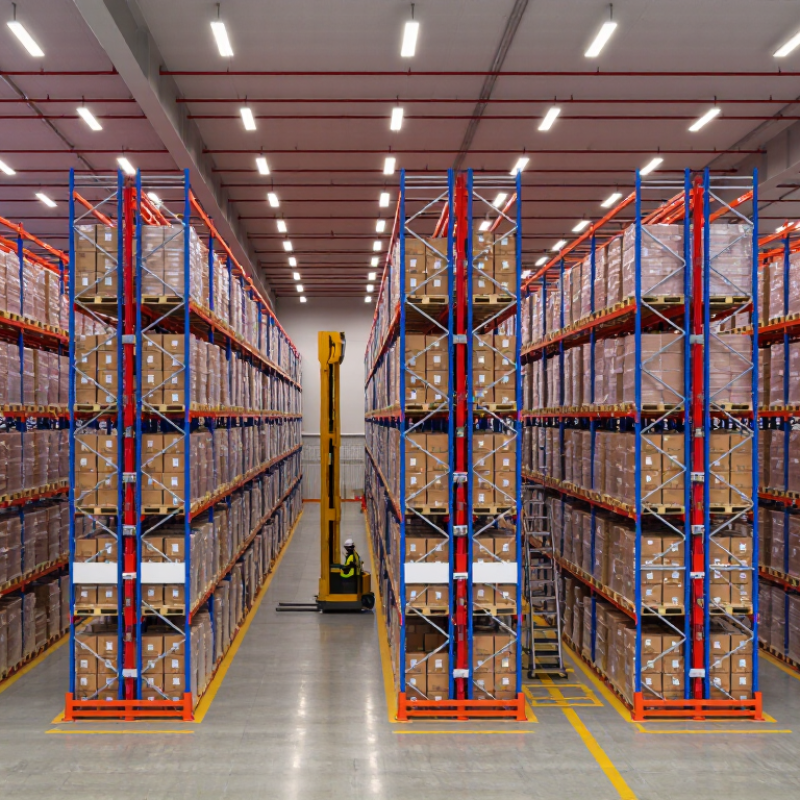
How to Choose Narrow Aisle Storage for Your Warehouse?

Define Your Warehouse Capacity and Inventory Requirements

Before selecting narrow-aisle storage, map what must fit—not just how many pallets you own. Record peak inventory by SKU, pallet dimensions, load weights, and seasonal variation. Measure clear ceiling height, columns, sprinklers, and existing obstructions. Then calculate usable storage volume, leaving room for safe handling and replenishment. Count the aisle width required by the actual lift truck; “narrow aisle” is not one universal dimension.

Look beyond today’s average stock. A slow-moving item can still occupy prime space during a seasonal peak. Separate fast- and slow-moving goods, and note which products need frequent access. MHI’s 2024 Annual Industry Report found that 55% of surveyed supply-chain professionals planned to adopt robotics and automation within five years. That is not a guarantee of future automation, but it is a useful reason to check whether proposed aisles and rack layouts can support changing equipment.

Build a modest growth allowance into the plan, then test it against peak inventory—not an optimistic forecast. Forecasts miss. Review stock records, walk the floor, and compare planned pallet positions with real load sizes. A spreadsheet may say the layout fits; a beam, column, or oversized pallet may disagree. Keep access routes and operating clearances in the calculation, and verify final dimensions with qualified warehouse-design professionals.

How to Choose Narrow Aisle Storage for Your Warehouse?

Define Your Warehouse Capacity and Inventory Requirements

This illustrative planning example compares peak pallet inventory with the rack positions needed to keep planned occupancy at or below 85%. Required positions are calculated as peak pallets ÷ 0.85, rounded up. Replace these example figures with your own peak inventory counts and operating target before selecting a narrow-aisle system.

Compare Narrow Aisle Storage System Types

Narrow-aisle selective racking suits warehouses that need direct access to many pallet locations. Reach trucks serve these aisles, but check turning clearance with the actual pallet and load dimensions. A small overhang can cause repeated rack strikes. Very-narrow-aisle systems use turret trucks, often guided by rails or floor wire. They can fit more locations into the same footprint, but require compatible trucks and careful floor checks. Guidance is not a substitute for operator training. It also adds equipment and maintenance costs.

Mobile pallet racking moves rack rows to open an access aisle, making it useful when storage density matters more than simultaneous access. Picking can slow while a row moves. MHI’s 2024 Annual Industry Report surveyed more than 2,000 supply-chain professionals; 55% planned to invest over $1 million in supply-chain technology within two years. That figure signals investment interest, not proof that a particular aisle system will pay off. Compare each option using pallet positions, picks per hour, peak-season traffic, and the cost of changing trucks or flooring. Walk the proposed layout with operators. Their turning paths may expose problems that drawings miss.

Measure Aisle Widths and Select Compatible Equipment

Start with the clear aisle, not the distance between rack uprights. Measure from the nearest projecting load or rack guard on one side to the obstruction opposite. Check several points along each aisle. Floors, columns, and pallet overhangs can change the usable width. Measure twice.

Record the largest load dimensions, including any uneven or protruding cartons. Then compare the aisle measurement with the turning and clearance requirements for the intended lift truck. A truck’s overall width alone is not enough; its turning radius, load length, and required operating clearance matter too. Use the equipment supplier’s specifications, and confirm the figures with a loaded-truck trial where practical. Keep a safe margin rather than designing around a perfect maneuver.

It is tempting to rely on a floor plan, but drawings may miss a guard that shifted or a pallet stored out of position. Mark the proposed aisle on the floor and test turning at the tightest location. Check that operators can place and retrieve loads without striking racks or blocking adjacent traffic. If measurements are close, review the rack layout or equipment choice before installation. A few centimeters can matter.

Evaluate Safety, Accessibility, and Picking Efficiency

How to Choose Narrow Aisle Storage for Your Warehouse?

Evaluate Safety, Accessibility, and Picking Efficiency

Narrow-aisle storage can add capacity, but aisle width should reflect real operating conditions, not a drawing alone. Measure the truck’s turning envelope, pallet overhang, rack protection, and floor levelness. Confirm clearances with an equipment supplier and a qualified warehouse designer. A few extra centimeters may matter. Keep pedestrian routes visibly separate, and use mirrors or barriers where sightlines disappear at cross-aisles. Check rack load signs and inspect uprights after impacts; a small bend is not merely cosmetic.

Accessibility affects every pick. Put fast-moving items at reachable levels, keep heavy loads low, and group related products to reduce backtracking. Test the proposed layout with actual order lines, including bulky cartons and replenishment moves. During a pilot, track picks per hour, travel distance, missed scans, and near misses. The fastest aisle on paper may become a bottleneck when replenishment meets picking. Don’t overlook exceptions. A warehouse rarely handles only its average order. Leave a practical turning or staging point, even if it costs a storage location. The trade-off can feel disappointing, but safe access matters when a pallet arrives damaged or demand changes. Revisit the layout after seasonal peaks; assumptions age quickly.

Estimate Costs and Plan System Implementation

A narrow aisle system can add storage without expanding the building, but the purchase price is only one part of the cost. Estimate the full project: racks, lift equipment, floor repairs, lighting changes, installation, and staff training. Ask suppliers to separate these items in their quotes. That makes gaps easier to spot.

Start with a measured layout, not a rough sketch. Record aisle widths, clear ceiling height, column positions, floor condition, and the dimensions of your most common loads. Then check that the proposed equipment can turn and reach safely under real operating conditions. A layout that saves space on paper may slow picking or create costly bottlenecks. Costs shift. Include possible downtime during installation, too.

Plan implementation around daily warehouse activity. A small pilot area can reveal problems with turning space, visibility, or picking speed before the whole system is installed. Agree on who will verify measurements and approve layout changes. Keep a contingency allowance for unexpected floor work or equipment adjustments; the exact amount depends on site conditions and quote detail. The awkward part is accepting that estimates can be wrong. Review them after the site survey, and revise the schedule before ordering equipment.

FAQS

How should I estimate warehouse capacity before choosing narrow-aisle storage?

Record peak inventory by SKU, pallet size, load weight, and seasonal changes. Measure ceiling height, columns, sprinklers, and obstructions. Leave space for handling and replenishment. Average stock can mislead.

Is there one standard narrow-aisle width?

No. Aisle width depends on the actual lift truck and its turning envelope. Check pallet overhang, rack protection, floor levelness, and operating clearances. A few extra centimeters may prevent expensive damage.

How can I prepare the layout for future changes?

Add a modest growth allowance based on peak inventory, not optimistic forecasts. Check whether aisles can support different equipment later. Automation may become important, but it is not guaranteed. Plans age.

Where should fast-moving and heavy products be stored?

Place fast-moving items at reachable levels. Keep heavy loads low and frequently picked products near efficient routes. Group related items to reduce backtracking. Convenience is not the only concern.

What safety details should a narrow-aisle design include?

Separate pedestrian routes clearly from equipment paths. Use mirrors or barriers where cross-aisles have poor visibility. Post rack load signs and inspect uprights after impacts. A small bend still matters.

How can I test whether the layout supports efficient picking?

Run a pilot using real order lines, bulky cartons, and replenishment tasks. Track picks per hour, travel distance, missed scans, and near misses. Watch for bottlenecks when picking and replenishment meet. Paper speed can disappoint.

What costs should be included in the project budget?

Include racks, lift equipment, floor repairs, lighting changes, installation, and staff training. Also estimate downtime during installation and possible equipment adjustments. Ask for separate cost lines in supplier quotes. Hidden work adds up.

Why should I keep staging or turning space?

A practical turning or staging point helps manage damaged pallets and changing demand. It may reduce one storage position, but it supports safer access. The trade-off feels unpleasant. Recheck it after seasonal peaks.

Conclusion

Choosing Narrow Aisle Storage starts with understanding how much space your warehouse can use and what your inventory needs. Assess available floor and vertical capacity, product dimensions, load weights, and how often items are moved. Then compare suitable storage system types, considering the balance between storage density, access to individual products, and the way orders are picked.

Measure aisle widths carefully and match them to compatible handling equipment before finalizing a layout. Also consider operator safety, clear access to stock, and the effect of aisle design on travel time and picking efficiency. Finally, estimate the full cost of equipment, installation, and any required facility adjustments. A phased implementation plan can help limit disruption, prepare staff, and confirm that the system meets operational needs as warehouse activity changes.

Charlotte

Charlotte

Charlotte is a seasoned marketing professional with a deep understanding of the company's portfolio and a passion for elevating its presence in the market. With a keen eye for detail and a commitment to excellence, she ensures that our professional blog is regularly updated with insightful articles......