Why Choose Boltless Systems for Global Procurement?
Global procurement teams increasingly need storage that travels well across markets, adapts to different facilities, and controls long-term costs. Boltless Systems answer this need with simple, modular components. Uprights, beams, and shelves can often be assembled without welding or specialized tools. A small team can adjust a storage bay beside a receiving dock, then expand it when inventory grows.
Warehouse systems expert Dr. John Bartholdi III has emphasized a practical principle: “Good warehouse design makes the movement of materials easier to understand.” This idea explains the value of Boltless Systems. Clear shelf levels support faster picking, safer replenishment, and more consistent space planning. They also help procurement teams compare specifications across suppliers. That matters when a project includes several countries, currencies, and delivery schedules.
The benefits are tangible. A distributor can reposition shelves for boxed parts, cartons, or archive containers. Replacement components may also reduce downtime after relocation. Still, boltless does not mean risk-free. Uneven floors, overloaded shelves, poor anchoring, or unclear assembly instructions can create failures. Procurement teams should verify load ratings, steel quality, corrosion protection, packaging, and technical support before ordering.
Details matter.
A reliable decision combines supplier audits, sample inspections, and installation trials. Local operating conditions deserve attention too. Humidity, seismic exposure, forklift traffic, and available labor can change the best specification. Boltless Systems are not automatically the cheapest choice. They become valuable when flexibility, repeatability, and measurable lifecycle performance guide the purchase.
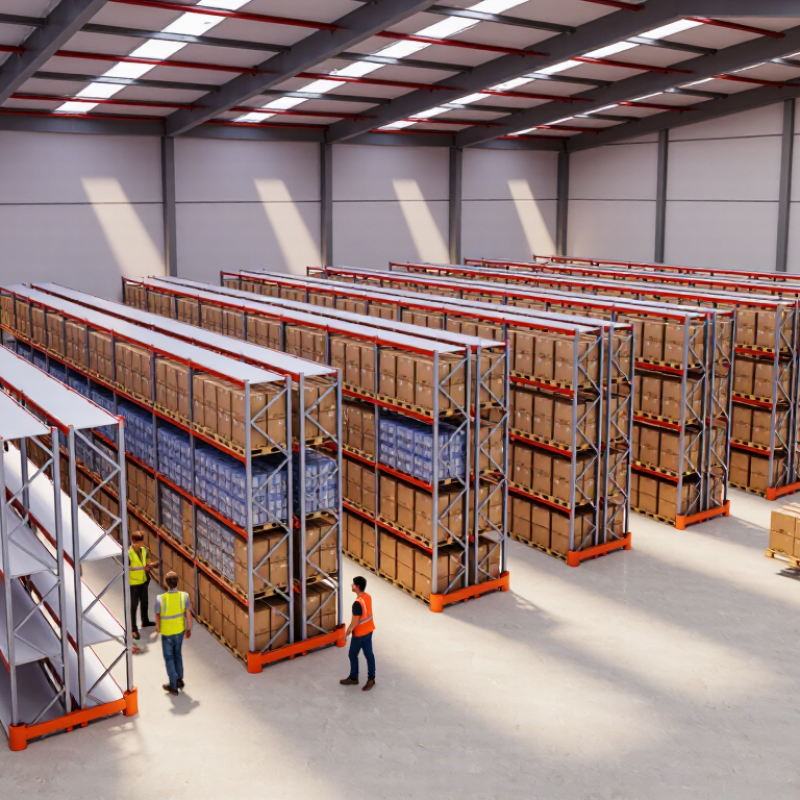
Boltless systems are shelving units assembled without nuts, bolts, or specialized tools. Their frames use slotted uprights, locking beams, and adjustable shelves. A rubber mallet may help, but basic hand assembly is often enough. This design supports modular deployment across warehouses, workshops, archives, and retail backrooms.
Procurement teams can order common components and adapt layouts locally. In practice, installers can reconfigure a three-tier bay during a shift. Shelves may hold cartons, bins, spare parts, or labeled files. Height adjustments matter when one shipment contains tall containers and another holds small boxes. Standardized dimensions simplify specifications, packing, and replacement planning. Local teams still need clear inspection training. Tool-free does not mean risk-free. An unlocked beam or overloaded shelf can cause failure.
The system is not perfect. Very heavy or irregular loads may require reinforced storage. Export packaging, climate, and installation habits can affect performance. Procurement managers should test one representative bay before expanding. Measure aisle width, ceiling clearance, and loading patterns. Record assembly time and damage rates. A small trial often exposes assumptions that spreadsheets miss. That makes deployment more reliable, though not effortless.
| Procurement Dimension | Boltless System Data | Global Deployment Relevance | Specification or Verification Point |
|---|---|---|---|
| Definition | Steel shelving assembled through interlocking frames, clips, tabs, rivets, or similar mechanical connections instead of conventional threaded bolts. | Reduces dependence on specialized installation labor and supports repeatable assembly across different locations. | Confirm whether the design is completely tool-free or requires a rubber mallet or basic hand tools for final positioning. |
| Assembly Method | Primary frame components are connected without threaded fasteners; shelf panels commonly rest on clips, brackets, or formed supports. | Simplifies installation instructions, training, and replacement of damaged components. | Request assembly drawings, component tolerances, and a test-assembly procedure before volume purchasing. |
| Shelf-Level Adjustment | Many systems use regularly spaced upright slots; common commercial configurations use approximately 25 mm or 50 mm adjustment increments. | Allows storage levels to be reconfigured for different cartons, totes, tools, or spare parts without replacing the complete bay. | Verify slot pitch, usable adjustment range, and whether shelf levels can be changed while the bay is partially loaded. |
| Typical Planning Dimensions | Common planning examples include bay widths of approximately 900–1,800 mm and shelf depths of approximately 300–900 mm. | Provides a modular basis for warehouses, maintenance rooms, archives, retail backrooms, and light industrial areas. | Dimensions are system-dependent; confirm clear width, clear depth, overall height, aisle width, and door or lift access constraints. |
| Shelf Capacity | Light- and medium-duty products are commonly specified in the approximate range of 100–500 kg per shelf, depending on span, depth, beam profile, and load distribution. | Supports procurement segmentation by application instead of using one configuration for every site. | Use the supplier’s tested or engineered uniformly distributed load rating; do not treat the range as a universal capacity. |
| Materials | Uprights and supports are generally formed or rolled steel. Shelf surfaces may use steel panels, wire decking, MDF, particleboard, or laminated boards. | Enables material selection based on humidity, cleanliness, fire requirements, weight, and local replacement availability. | Specify steel grade where required, panel thickness, edge treatment, corrosion protection, and applicable fire or hygiene requirements. |
| Finish and Corrosion Protection | Typical finishes include powder coating, painted steel, or galvanized components; protection level varies by environment. | Supports deployment in offices, warehouses, semi-open areas, and other locations with different exposure conditions. | Match the finish to humidity, salt exposure, chemicals, cleaning methods, and indoor or outdoor use. |
| Packaging and Logistics | Disassembled frames and shelves can generally be packed more compactly than fully assembled shelving, subject to component geometry. | Can improve container utilization, simplify site delivery, and reduce the need to ship preassembled structures. | Request packed dimensions, gross weight, pallet quantity, carton labeling, and loading plans for each standard configuration. |
| Interchangeability | Components are interchangeable only when slot geometry, connector design, dimensions, and load ratings are compatible. | A controlled component platform can reduce spare-part variety across multiple facilities. | Create a controlled bill of materials and verify compatibility through physical samples or dimensional drawings. |
| Safety and Stability | Stability depends on bay height-to-depth ratio, load placement, floor condition, bracing, anchoring, and the manufacturer’s design. | Allows the same modular concept to be adapted to different building codes and facility layouts. | Assess anchoring, bracing, seismic requirements, floor loading, maximum shelf load, and inspection procedures for each country. |
| Procurement Standardization | A standard kit can be defined by upright height, bay width, shelf depth, shelf count, panel type, finish, and accessories. | Makes quotations easier to compare and supports repeat orders across regions. | Use a common technical data sheet with metric dimensions, load ratings, packaging data, and acceptance criteria. |
| Applicable References | Storage-system safety and design requirements may be evaluated against relevant national regulations and recognized frameworks such as EN 15635 or applicable ANSI storage-equipment standards. | Provides a structured basis for technical review when products are sourced or deployed across different markets. | Confirm the exact standard edition, scope, testing method, and legal applicability with the project engineer or local authority. |
Note: Dimension and capacity ranges are planning references commonly found in light- and medium-duty shelving specifications. Final selection must be based on project-specific engineering data, local regulations, floor conditions, and verified supplier documentation.
Request written load tables, test conditions, beam spacing, load distribution rules, deflection limits, and safety factors. Product images are not enough.
No. The rating may apply to one shelf, one bay, or a specific spacing. Details matter.
Evenly spread cartons are easier to support than four concentrated pallets. Localized weight can bend beams and obstruct access.
Use the same shelf dimensions, upright spacing, number of levels, and floor conditions. Otherwise, the comparison becomes uneven.
Carton sizes and inventory forecasts change. Adjustable heights can prevent expensive modifications later.Plans can be wrong.
No. Confirm engineering support, installation guidance, inspection records, and replacement procedures before approval.
Include labor, inland transport, ocean freight, insurance, duties, customs fees, damage, and replacement stock.
They may use container space more efficiently and reduce handling exposure. Packaging still needs practical testing.
Freight prices, customs delays, delivery reliability, and seasonal surcharges vary. One ideal route can produce a misleading spreadsheet.
Record installation minutes, rework hours, training needs, and downtime. Savings are possible, not guaranteed.Instructions can fail.
Boltless Systems offer a practical foundation for global procurement by combining tool-free assembly, modular design, and flexible deployment across warehouses, distribution centers, and industrial facilities. Their connection-based structure can simplify installation, relocation, and future expansion while supporting consistent layouts across multiple countries. For safe specification, procurement teams should evaluate designs against recognized benchmarks such as EN 15635 and ANSI/RMI MH16.1, including stability, loading behavior, inspection procedures, and appropriate operating conditions.
Capacity planning should compare supplier options across typical shelf-load ranges of 500–1,000 kg, while confirming the difference between evenly distributed and concentrated loads. A complete purchasing evaluation should include labor, freight, duties, installation, maintenance, and replacement costs rather than focusing only on unit price. To strengthen global supplier control, buyers can request ISO 9001 certification evidence and EN 10204 3.1 material documentation, helping verify production consistency, material traceability, and technical compliance throughout the supply process.

 Kimsuk Racking