What Are the 7 Best Vertical Racks for Warehouses?

Time:2026-11-13 Author:Charlotte
0%

Warehouse space is expensive, and bulky materials can consume it quickly. Pipes, lumber, trim, and sheet goods often create awkward piles that slow picking and hide inventory. Vertical Racks store suitable items upright, using floor space efficiently while keeping stock visible. But a taller rack is not automatically a better one.

The right choice depends on what your warehouse actually handles. Consider item length, weight, shape, and how often workers need access. Check the rack’s rated capacity, base dimensions, protective features, and compatibility with your handling equipment. A rack that holds long boards may not suit fragile panels or mixed-size stock. Measure twice.

This guide compares seven vertical rack options for warehouse use, including differences in design, access, and practical applications. It also highlights questions worth asking before purchase, such as whether the rack can be anchored securely and whether stored items remain stable during loading. Product specifications should be verified with the manufacturer, since capacities and configurations vary. A useful shortlist starts with real measurements, not attractive photos. Some recommendations may still be imperfect: warehouse layouts, inventory, and picking routines differ, and no single rack suits every operation. Use these comparisons as a starting point, then confirm the details against your site’s requirements.
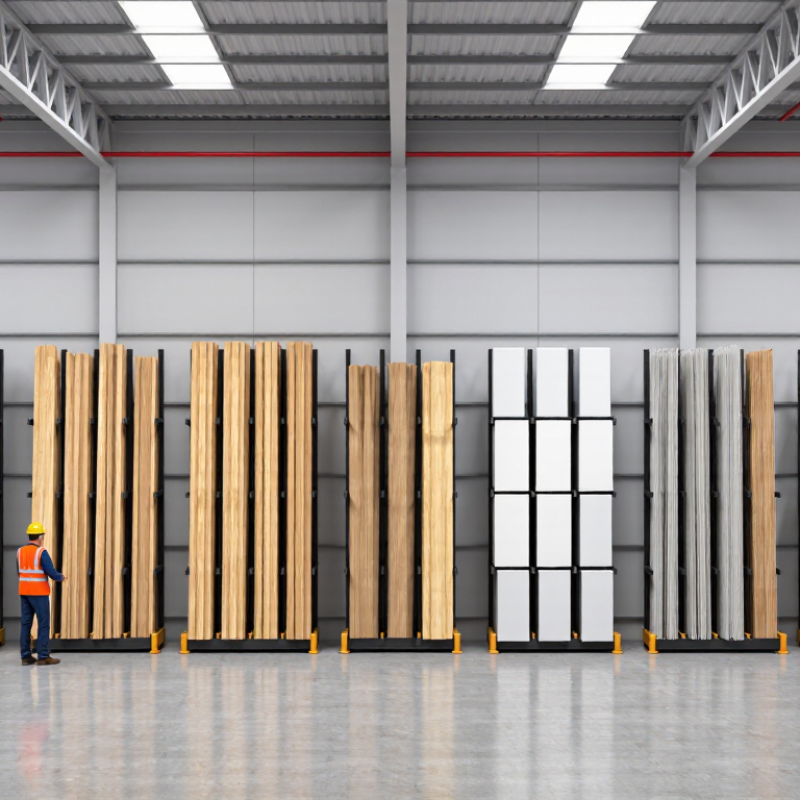
What Are the 7 Best Vertical Racks for Warehouses?

Understanding Vertical Racks and Their Role in Warehouses

Vertical racks use a warehouse’s unused overhead space to store pallets, long materials, or smaller loads. They can free floor area for picking, packing, and equipment movement. This matters in buildings where every aisle competes with staging space. Space matters. But added height is not automatically better; it can make stock harder to reach and inspections more demanding.

Different rack designs suit different loads. Selective pallet racks give workers direct access to individual pallet positions, while drive-in systems store more pallets in less floor area but limit access to some loads. Cantilever racks support long, awkward items such as pipes or timber. The right choice depends on inventory size, weight, turnover, and handling equipment. A layout that looks efficient on paper may feel cramped once forklifts turn with real loads.

Planning should start with measured loads and the clear height beneath lights, sprinklers, and roof structures. Check floor capacity and allow enough aisle width for the equipment in use. Beams and frames must match the intended load; assumptions based on appearance are unreliable. Measure twice. Clear labels and visible load information help staff place stock consistently. Review the arrangement as inventory changes, because a rack suited to today’s goods may create awkward picking tomorrow.

Key Features to Compare When Choosing a Vertical Rack

What Are the 7 Best Vertical Racks for Warehouses?
Key Features to Compare When Choosing a Vertical Rack

The best rack depends on what you store, how often you handle it, and your available floor space. Compare usable height, bay width, and access openings against the longest items in your inventory. A bundle of pipe or timber needs clear separation, not just a tall frame. Measure the load, too. Include attachments and uneven weight distribution when checking each level’s rated capacity.

Stability deserves close attention. The U.S. Bureau of Labor Statistics reported 4.8 recordable injury and illness cases per 100 full-time workers in warehousing and storage in 2023. That figure covers the sector, not rack-related incidents, but it underlines why safe handling matters. Check anchoring requirements, base design, load labels, and whether workers can retrieve stock without reaching over unstable bundles. Follow applicable rack design guidance, such as ANSI MH16.1, and have site-specific loads reviewed by a qualified professional.

Also compare construction, corrosion resistance, installation needs, and future adjustability. If forklifts serve the aisle, verify turning clearance with the actual truck and load—not just a floor plan. Hand access may be slower than expected. I have seen layouts that looked efficient on paper but left awkward gaps beside columns. Think through replenishment and picking before fixing the rack position. A small mock-up can expose a bad reach or blocked walkway before installation.

Seven Types of Vertical Racks for Warehouse Storage

Warehouse racking is not one-size-fits-all. Aisle width, load size, and product turnover shape the choice. Seven common options are selective pallet, double-deep, drive-in, push-back, pallet-flow, cantilever, and mobile racks. Selective racks provide direct access to each pallet, while double-deep designs store more loads per aisle but require compatible handling equipment. Drive-in racks suit large quantities of similar products. Push-back and pallet-flow systems improve storage density, though they need careful load and lane planning.

Cantilever racks hold long goods such as timber or pipe, with clear access from the front. Mobile racks move along floor rails, reducing fixed aisles but requiring extra attention to controls and access procedures. Space saved, trade-offs remain. A site assessment should check floor capacity, sprinkler clearance, beam ratings, and forklift turning space before installation. The U.S. Bureau of Labor Statistics recorded 4.8 cases of nonfatal workplace injury or illness per 100 full-time workers in warehousing and storage in 2022. Safe aisles and regular rack inspections matter.

MHI’s 2024 Annual Industry Report found that 55% of surveyed supply-chain leaders planned to increase investment in technology and innovation. That signals growing interest in smarter operations, not a universal need for automated storage. A high-density system can slow picking if products move unpredictably. Measure actual inventory and replenishment patterns; estimates alone can mislead.

How to Match a Rack Type to Your Materials and Workflow

Matching a vertical rack to its material starts with shape, weight, and handling frequency. Sheet racks suit flat steel or plywood stored upright in divided bays. Vertical cantilever racks accommodate long, awkward loads when workers need access from the front. Bar and pipe racks need supports that prevent narrow stock from slipping or bowing. Coil racks require cradles sized for each coil’s diameter and weight. Panel racks work well for doors, glass, or finished boards, but separators help prevent edge damage. Lumber racks need sturdy compartments and clear load limits. Mobile vertical racks can save floor space for lighter items moved in small batches.

The workflow matters just as much. Measure the largest load, not just the usual one, and check how it enters and leaves the bay. A forklift, hoist, or manual pull changes the needed clearance and access. Frequent picks may favor open-front compartments; slow-moving stock can use denser storage. Small details matter. Label each bay, keep aisles clear, and confirm floor capacity, anchoring, and rack ratings with a qualified supplier or engineer. A rack can fit the material and still frustrate workers if retrieval is awkward. That trade-off is easy to underestimate. Test the proposed layout with real load dimensions and handling steps before committing.

Installation, Load Limits, and Safe Use of Vertical Racks

Installing a vertical rack begins with the floor, not the uprights. Check the slab for cracks, uneven spots, and sufficient capacity before fixing anything in place. Measure ceiling height, aisle width, and nearby doors or sprinklers. Follow the rack maker’s installation instructions, including specified anchors and bracing. Use a level to check each frame. A post that looks straight may still be out of plumb.

Read the load rating for each storage position and the full rack. They are not always the same. Include the weight of the stored material, not just its length or volume. Place heavier bundles in lower positions and distribute items evenly across supports. Retainers should keep long stock from shifting or rolling out. Never guess. A quick estimate can be wrong.

Keep aisles clear, and use suitable handling equipment to place or remove stock. Do not climb the rack or reach beneath an unstable load. Inspect anchors, beams, arms, and retainers regularly, especially after an impact or layout change. Keep damaged sections out of service until they are assessed. I would rather recheck a crooked frame than trust a quick glance. Site conditions vary, so a qualified professional should review uncertain floor or loading questions.

What Are the 7 Best Vertical Racks for Warehouses? - Installation, Load Limits, and Safe Use of Vertical Racks

Warehouse vertical-storage options compared by application, installation, and safe-use requirements.
Vertical Rack Type Best For Installation Considerations Load Limits and Safe Use
A-frame sheet rack Sheet goods such as plywood, drywall, glass, or metal panels stored upright. Place on a level, load-bearing floor. Secure the frame against movement or overturning as specified by its design. Keep access aisles clear for loading equipment. Use only the rack’s posted capacity and any per-compartment limits. Keep sheets fully supported, evenly distributed, and restrained against tipping; do not exceed the rack’s permitted sheet size or height.
Vertical panel rack with dividers Mixed-size panels, doors, partitions, and other flat materials that benefit from separated storage. Fit dividers and retaining bars in their designated positions. Anchor or brace the rack where required, and allow enough clearance to remove materials without striking adjacent loads. Follow the rated capacity for the complete rack and each compartment. Store panels within their dividers, avoid uneven loading, and secure tall or unstable pieces before access.
Vertical pipe and bar rack Long stock such as pipe, conduit, rods, and metal bar kept upright in segregated slots. Install on a stable, level floor and secure the structure as specified. Use compartments sized for the stock, with restraints that prevent long pieces from leaning into aisles. Observe posted total and compartment capacities. Load compatible lengths together, keep stock centered in its slot, and use a safe retrieval method for tall or heavy pieces.
Vertical lumber rack Boards, trim, and other long wood products stored vertically for quick selection. Check floor condition and rack stability before installation. Provide end stops or retaining members, and position the rack away from traffic routes where protruding stock could create a hazard. Use the marked rating and distribute bundles as directed. Prevent boards from sliding or leaning out of the rack; do not store damaged or excessively bowed material where it can fall.
Vertical roll and carpet rack Carpet, fabric, film, or other cylindrical rolls stored upright. Use a base and retaining system designed for the roll diameter and length. Keep the rack level, and leave sufficient clearance for safe roll placement and removal. Check the rack’s rated load and approved roll dimensions. Restrain rolls against rolling or tipping, avoid overloading individual positions, and use suitable handling equipment for heavy rolls.
Vertical coil rack Wire, cable, or other coils stored upright in purpose-designed cradles or compartments. Use only a rack designed for the coil’s orientation and geometry. Confirm that cradles, dividers, and restraints are installed correctly and that the floor can support the loaded rack. Follow the posted capacity for each position and the complete rack. Secure coils against rolling or shifting, and do not remove a restraint while a coil could move uncontrollably.
Vertical tool, die, or mold rack Heavy tools, dies, molds, and fixtures stored upright in dedicated slots. Choose slot dimensions and supports to match the items. Anchor or brace the rack as required, and arrange the layout so heavy items can be handled without reaching across unstable loads. Use the manufacturer’s rating for each slot and the whole structure. Support each item at its intended contact points, secure it against falling, and use rated lifting equipment when required.

Important: There is no universal safe load limit for a vertical rack type. Capacity depends on the rack’s design, configuration, installation, and the condition of the floor. Use the rack’s legible capacity plate and installation instructions; do not load an unmarked or damaged rack until it has been assessed by a qualified person.

FAQS

How do I choose the right vertical rack?

Match rack height, bay width, and openings to your longest stored items. Measure actual loads, including attachments and uneven weight.

Which rack works best for long materials?

Cantilever racks provide front access for timber, pipe, and similar goods. Check that each arm suits the load length and weight.

How do rack types affect access?

Selective racks offer direct access to each pallet. Double-deep, drive-in, push-back, and pallet-flow systems can store more per aisle, but need careful planning.

What should I check before installing a rack?

Review floor capacity, anchoring, base design, load labels, and sprinkler clearance. Have site-specific loads assessed by a qualified professional.

How can I check forklift clearance?

Test turning space with the actual forklift and its load. A floor plan may miss awkward gaps beside columns.

Do high-density racks always improve warehouse efficiency?

No. They can reduce aisle space but may slow picking when inventory moves unpredictably. Check real replenishment and picking patterns.

Can mobile racks save floor space?

They can reduce fixed aisles by moving along floor rails. Access controls and operating procedures need extra attention.

How can I find layout problems before installation?

Make a small mock-up and test reach, replenishment, and walkway access. Looks simple. It isn't. I would still test it.

Conclusion

Vertical Racks help warehouses store long, bulky, or flat materials upright, making better use of floor space while keeping items visible and accessible. The best option depends on what you store, how often it moves, the space available, and the equipment used to handle it. Common choices include cantilever racks, A-frame racks, sheet-material racks, pipe and tube racks, lumber racks, bar-stock racks, and adjustable vertical storage systems. Each design supports different shapes and handling needs, so comparing capacity, footprint, access, adjustability, and compatibility with your workflow is essential.

Before choosing a rack, assess the materials’ dimensions and weight, expected inventory changes, and the routes workers use to retrieve and transport stock. Plan installation on a suitable, level surface, follow the rack’s stated load limits, and distribute loads as directed. Clear labeling, routine inspections, and careful handling help maintain an organized storage area and reduce the risk of items shifting or falling.

Charlotte

Charlotte

Charlotte is a seasoned marketing professional with a deep understanding of the company's portfolio and a passion for elevating its presence in the market. With a keen eye for detail and a commitment to excellence, she ensures that our professional blog is regularly updated with insightful articles......